“调性与噪音的区别在于数学形式”,我觉得这话听起来就没那么带感了。关于调性和声,我最喜欢的研究是阿诺德·勋伯格的《和声学》(听起来挺讽刺的;这里有 Google Books 的预览:<http://books.google.com/books?id=5Y5MyjbU87oC&lpg=PR3...>)。这是第一本试图教授作曲的理论教科书……
"The distinction between tonality and noise is mathematical form" doesn't have the same ring to it, I suppose. My favorite study of tonal harmony is "Theory of Harmony" by Arnold Schoenberg (sounds ironic; here's a preview on google books: <http://books.google.com/books?id=5Y5MyjbU87oC&lpg=PR3...). It was the first theory textbook that attempted to teach composition…
Theory of Harmony, by Schoenberg The book takes music theory as its subject, but explores perception, culture, the meaning of art, innovation, and other related ideas in its lengthy footnotes and tangents. It shows a…
An influential book for me was Arnold Schoenberg's Theory of Harmony. It's half harmonic theory and half a manifesto on art. In a lengthy footnote he advises using materials to their advantages, rather than forcing them to do something they weren't meant to do. I've seen…
A lot of the early music theory comes from discovering resonating overtones before having the full physics & mathematical model to describe it exactly scientifically. The opening chapters of Theory of Harmony by Arnold Schoenberg are a very interesting read from that perspective. In a way its the same question as for math. Do mathematicians invent new mathematical theories or do they discover structures and…
From my read of "Theory of Harmony" and "Structural Functions of Harmony", it seems to me Schoenberg definitely wasn't aiming to be a great innovator, he was desperate to be part of the great tradition and saw serialism as an inevitable…
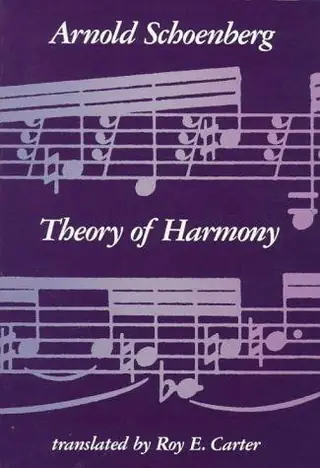
“调性与噪音的区别在于数学形式”,我觉得这话听起来就没那么带感了。关于调性和声,我最喜欢的研究是阿诺德·勋伯格的《和声学》(听起来挺讽刺的;这里有 Google Books 的预览:<http://books.google.com/books?id=5Y5MyjbU87oC&lpg=PR3...>)。这是第一本试图教授作曲的理论教科书……
"The distinction between tonality and noise is mathematical form" doesn't have the same ring to it, I suppose. My favorite study of tonal harmony is "Theory of Harmony" by Arnold Schoenberg (sounds ironic; here's a preview on google books: <http://books.google.com/books?id=5Y5MyjbU87oC&lpg=PR3...). It was the first theory textbook that attempted to teach composition…
勋伯格的《和声学》。这本书以乐理为主题,但在其冗长的脚注和跑题中,探讨了感知、文化、艺术的意义、创新以及其他相关的想法。它展现了一个……
Theory of Harmony, by Schoenberg The book takes music theory as its subject, but explores perception, culture, the meaning of art, innovation, and other related ideas in its lengthy footnotes and tangents. It shows a…
对我影响很大的一本书是阿诺德·勋伯格的《和声学》。它一半是和声理论,一半是艺术宣言。在一段长长的脚注里,他建议顺应材料本身的优势来使用它们,而不是强迫它们去做并非其本意的事情。我见过……
An influential book for me was Arnold Schoenberg's Theory of Harmony. It's half harmonic theory and half a manifesto on art. In a lengthy footnote he advises using materials to their advantages, rather than forcing them to do something they weren't meant to do. I've seen…
许多早期的音乐理论,都源自人们在拥有完整的物理和数学模型对其进行精确科学描述之前,就发现了共振泛音。从这个角度来看,阿诺德·勋伯格《和声学》的开篇章节读起来非常有意思。在某种程度上,这和数学面临的问题一样。数学家究竟是发明了新的数学理论,还是发现了结构和……
A lot of the early music theory comes from discovering resonating overtones before having the full physics & mathematical model to describe it exactly scientifically. The opening chapters of Theory of Harmony by Arnold Schoenberg are a very interesting read from that perspective. In a way its the same question as for math. Do mathematicians invent new mathematical theories or do they discover structures and…
阿诺德·勋伯格在《和声学》中说过:“音乐没有规则,只有风格的规则”。
Arnold Schoenberg in Theory of Harmony said "There are no rules of music, only rules of style".
从我读《和声学》和《和声的结构功能》来看,在我看来勋伯格绝对不是奔着当什么伟大革新者去的,他极度渴望融入伟大的传统之中,并将序列主义视为一种不可避免的……
From my read of "Theory of Harmony" and "Structural Functions of Harmony", it seems to me Schoenberg definitely wasn't aiming to be a great innovator, he was desperate to be part of the great tradition and saw serialism as an inevitable…