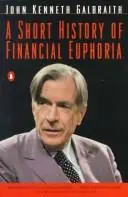
金融狂热简史
A short history of financial euphoria
John Kenneth Galbraith · 初版 1990 年
7人推荐
7位读者提及
10次提及
为何华尔街等地投资大师坐拥丰富的金融知识与经验,市场却依旧屡屡经历繁荣与暴跌?历史早已明示狂欢之后崩盘近乎必然,为何人们仍旧心甘情愿卷入投机热潮?在 A Short History of Financial Euphoria 中,著名经济学家 John Kenneth Galbraith 以深刻洞察与机智笔调,审视了过去三个世纪重大投机事件的共同特征——17 世纪西欧对非凡商品“郁金香”的投资热潮;英国的 South Sea
Hacker News 上怎么说
正在加载完整评论……
顺便提一句,John Kenneth Galbraith(在《A Short History of Financial Euphoria》中)有句非常经典的名言:“金融界一次又一次地为重新发明轮子而欢呼,而且往往还是个更不稳定的版本。所有的金融创新归根结底,无非都是以某种形式制造债务……”
Btw, a great, well known quote from John Kenneth Galbraith (from A Short History of Financial Euphoria) is: "The world of finance hails the invention of the wheel over and over again, often in a slightly more unstable version. All financial innovation involves in one form or another, the creation of debt…
如果你觉得我们正处于泡沫之中,而且觉得自己能精准逃顶,我强烈建议你去读读 John Kenneth Galbraith 的《A Short History of Financial Euphoria》[a]。这是我最喜欢的书摘之一:> 总有人坚信某种能推高价格的新局面掌控了全局,他们预期市场……
If you think we're in a bubble and you think you might be able to exit it at just the right time, I highly recommend you read "A Short History of Financial Euphoria" by John Kenneth Galbraith.[a] Here's one of my favorite passages from the book: > There are those who are persuaded that some new price-enhancing circumstance is in control, and they expect the market…
……脱身),结果跑得太晚了。这就是市场的非理性繁荣,历史上每一个周期都屡见不鲜。别只盯着 Mises.org 看,或者至少别光看它。去读读 John Kenneth Galbraith 的书:《A Short History of Financial Euphoria》、《The Great Crash》。读读 Michael Lewis 的书:《Boomerang》、《The Big Short》。甚至可以读读剖析人类所思与所为之间差异的通俗经济学著作:《Nudge》、《Thinking: Fast and Slow》……
…get out) and did so too late. This is the irrational exuberance of markets, as documented in every cycle in history. Don't read Mises.org, or at least not only. Read John Kenneth Galbraith's work: "A Short History of Financial Euphoria", "The Great Crash". Read Michael Lewis' work: "Boomerang", "The Big Short". Read even the pop economics works that expand on how people think, versus how they act: "Nudge", "Thinking: Fast and Slow".…
……Robert Cialdini 的《Influence: The Psychology of Persuasion》:http://www.amazon.com/exec/obidos/ASIN/0688128165 还有:* Edward Chancellor 的《Devil Take the Hindmost》:https://www.amazon.com/dp/0452281806 * John Kenneth Galbraith 的《A Short History of Financial Euphoria》:https://www.amazon.com/dp/0140238565 * Charles Mackay 的《Extraordinary Popular Delusions and the Madness of Crowds》:http://www.amazon.com/exec/obidos/ASIN/1586635581
…the Psychology of Persuasion," by Robert Cialdini: http://www.amazon.com/exec/obidos/ASIN/0688128165 Also: * "Devil Take the Hindmost," by Edward Chancellor: https://www.amazon.com/dp/0452281806 * "A Short History of Financial Euphoria," by John Kenneth Galbraith: https://www.amazon.com/dp/0140238565 * "Extraordinary Popular Delusions and the Madness of Crowds," by Charles Mackay: http://www.amazon.com/exec/obidos/ASIN/1586635581
如果你对广义上的泡沫概念感兴趣:经济学家 John Kenneth Galbraith 在他的《A Short History of Financial Euphoria》一书中专门探讨过泡沫。如果你对这类经济事件着迷,这本书很适合快速翻阅(里面讲了“郁金香狂热”、垃圾债券等):A Short History of Financial Euphoria > https://www.penguinrandomhouse.com/books/321392/a-short-hist...…
If you're interested in the concept of bubbles in general: The economist John Kenneth Galbraith wrote about bubbles in his book A Short History of Financial Euphoria. If you're intrigued by such economics events, this is a good, quick read (on the "tulip craze", junk bonds, etc): A Short History of Financial Euphoria > https://www.penguinrandomhouse.com/books/321392/a-short-hist...…
我不同意这种定性。我推荐看一下 Kenneth Galbraith 的《A Short History of Financial Euphoria》。他的核心论点是泡沫的发生就像钟表一样有规律。我赞同你说的,它们的规模确实各不相同。
I don't agree with this characterization. I would suggest 'A Short History of Financial Euphoria' by Kenneth Galbraith. His thesis is bubbles happen like clockwork. I agree with you that they do vary in magnitude.