……比如人脸识别。读起来很快也很过瘾,圈子里很多人应该都会喜欢。有点像阿达马的《数学领域的发明心理学》(Psychology of Invention in the Mathematical Field)。如果你有时间,波兰尼早期的《个人知识》(Personal Knowledge,1958年,大约400页)可能更值得深挖一下。我记得他的文风让我想起了刘易斯·托马斯(Lewis Thomas)。
…e.g. facial recognition. , A quick and enjoyable read that might appeal to many in this crowd. Akin to Hadamard's Psychology of Invention in the Mathematical Field. If you've got time, MP's earlier Personal Knowledge (1958, ~400pp) might be a worthwhile deeper-dive. I recall that his style reminded me of Lewis Thomas.
Sure. Polanyi is easy. He wrote a trio of short, accessible, and engaging books outlining his ideas: Science, Faith, and Society (1946), Personal Knowledge (1958), and The Tacit Dimension (1966). He was a true polymath, and very up-to-date with psychological science of his day; I would be interested in your thoughts as a specialist. Rosmini is hard. He…
…need epistemology to tell you why you can believe the results of the experiments. And you can't derive epistemology from experiments. Logical positivism tried to do this, and failed. Michael Polanyi's Personal Knowledge pretty much killed logical positivism, because he showed that no scientist is in the fully objective position that was required to set up and evaluate the experiments.
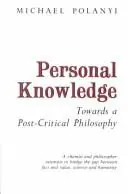
……比如人脸识别。读起来很快也很过瘾,圈子里很多人应该都会喜欢。有点像阿达马的《数学领域的发明心理学》(Psychology of Invention in the Mathematical Field)。如果你有时间,波兰尼早期的《个人知识》(Personal Knowledge,1958年,大约400页)可能更值得深挖一下。我记得他的文风让我想起了刘易斯·托马斯(Lewis Thomas)。
…e.g. facial recognition. , A quick and enjoyable read that might appeal to many in this crowd. Akin to Hadamard's Psychology of Invention in the Mathematical Field. If you've got time, MP's earlier Personal Knowledge (1958, ~400pp) might be a worthwhile deeper-dive. I recall that his style reminded me of Lewis Thomas.
大卫·多伊奇的《无穷的开始》、迈克尔·波兰尼的《个人知识》
Beginning of Infinity - David Deutsch Personal Knowledge - Michael Polanyi
居然没人提迈克尔·波兰尼。《个人知识》(Personal Knowledge)可以说是对实证主义最具决定性的批判了。
No mention of Michael Polanyi. Personal Knowledge is perhaps the defining criticism of positivism.
另见:波兰尼的《个人知识》(Personal Knowledge)和《隐性维度》(The Tacit Dimension)。
See also: Polanyi, Personal Knowledge and The Tacit Dimension.
当然可以。波兰尼读起来很轻松。他写了三本简短、通俗易懂且引人入胜的书来阐述自己的思想:《科学、信仰与社会》(1946)、《个人知识》(1958)和《隐性维度》(1966)。他是一位真正的通才,对当时当代的心理科学也非常精通;作为专业人士,我很想听听你的看法。罗 mini(Rosmini)就难啃多了。他……
Sure. Polanyi is easy. He wrote a trio of short, accessible, and engaging books outlining his ideas: Science, Faith, and Society (1946), Personal Knowledge (1958), and The Tacit Dimension (1966). He was a true polymath, and very up-to-date with psychological science of his day; I would be interested in your thoughts as a specialist. Rosmini is hard. He…
……你需要认识论来告诉你为什么可以相信实验结果。而且你无法从实验中推导出认识论。逻辑实证主义曾试图这么做,但失败了。迈克尔·波兰尼的《个人知识》可以说彻底终结了逻辑实证主义,因为他证明了没有任何科学家能够处于设计和评估实验所必需的完全客观的立场。
…need epistemology to tell you why you can believe the results of the experiments. And you can't derive epistemology from experiments. Logical positivism tried to do this, and failed. Michael Polanyi's Personal Knowledge pretty much killed logical positivism, because he showed that no scientist is in the fully objective position that was required to set up and evaluate the experiments.