来自 Trevor Kletz 的神作系列《What Went Wrong》:……我们的第一选择应该是看能否消除隐患——也就是本质更安全(inherently safer)的方法。比如,我们能不能用不可燃溶剂代替易燃溶剂?……第二……
From the excellent series of books What Went Wrong by Trevor Kletz: ...our first choice should be to see if we can remove the hazard—the inherently safer approach. For example, could we use a nonflammable solvent instead of a flammable one?...the second…
……制造商为我们的大型泵推荐的润滑油含有一种不同的添加剂,会与我们工艺流程中的某种杂质发生反应,从而催化放热反应”。我强烈推荐 Trevor Kletz 写的一本非常薄的书《What Went Wrong》。出人意料地引人入胜,带你梳理那些一次又一次在无数化工厂引发灾难的基础性问题。
…manufacturer recommends for our massive pumps have a different additive that reacts with an impurity in our process stream which catalyzes an exothermic reaction”. I highly recommend a very short book named “What Went Wrong” by Trevor Kletz. It’s surprisingly entertaining and walks you through basic things that have caused disasters at countless chemical plants over and over again.
……考虑那些糟糕到哪怕发生一次都无法承受的场景。在讨论生存危机(existential risks)时,这绝对适用![1] 我记得是在 Trevor Kletz 的书《What Went Wrong?: Case Histories of Process Plant Disasters》里读到的。
…considering scenarios which are so bad that it would be unacceptable for them to happen even once. When talking about existential risks that certainly applies! [1] I think I read it in Trevor Kletz' book "What Went Wrong?: Case Histories of Process Plant Disasters".
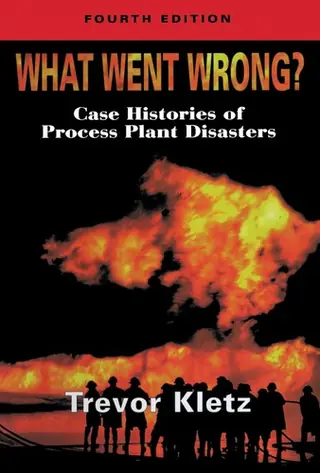
来自 Trevor Kletz 的神作系列《What Went Wrong》:……我们的第一选择应该是看能否消除隐患——也就是本质更安全(inherently safer)的方法。比如,我们能不能用不可燃溶剂代替易燃溶剂?……第二……
From the excellent series of books What Went Wrong by Trevor Kletz: ...our first choice should be to see if we can remove the hazard—the inherently safer approach. For example, could we use a nonflammable solvent instead of a flammable one?...the second…
……制造商为我们的大型泵推荐的润滑油含有一种不同的添加剂,会与我们工艺流程中的某种杂质发生反应,从而催化放热反应”。我强烈推荐 Trevor Kletz 写的一本非常薄的书《What Went Wrong》。出人意料地引人入胜,带你梳理那些一次又一次在无数化工厂引发灾难的基础性问题。
…manufacturer recommends for our massive pumps have a different additive that reacts with an impurity in our process stream which catalyzes an exothermic reaction”. I highly recommend a very short book named “What Went Wrong” by Trevor Kletz. It’s surprisingly entertaining and walks you through basic things that have caused disasters at countless chemical plants over and over again.
……考虑那些糟糕到哪怕发生一次都无法承受的场景。在讨论生存危机(existential risks)时,这绝对适用![1] 我记得是在 Trevor Kletz 的书《What Went Wrong?: Case Histories of Process Plant Disasters》里读到的。
…considering scenarios which are so bad that it would be unacceptable for them to happen even once. When talking about existential risks that certainly applies! [1] I think I read it in Trevor Kletz' book "What Went Wrong?: Case Histories of Process Plant Disasters".