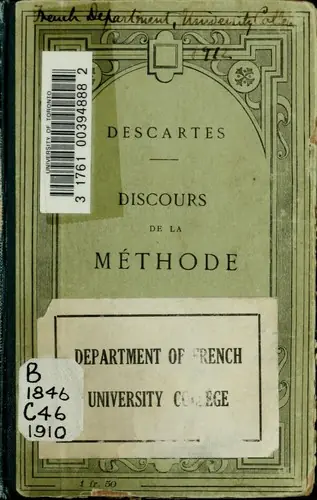
谈谈方法
Discours de la méthode
René Descartes · 初版 1644 年
2人推荐
3位读者提及
4次提及
哲学家和历史学家几乎一致认为,René Descartes 是现代哲学的鼻祖,或至少是我们这个时代第一位重要的哲学家。如果再加上哲学为所有其他领域的发展指引方向这一普遍共识,那么显而易见,Descartes 被赋予的重要性堪比希腊智性文化的萌芽,抑或基督教在地中海地区的起源与传播,甚至超越了历史上所有其他事件。对 Descartes 的研究,最适宜从
Hacker News 上怎么说
正在加载完整评论……
那些我十几岁时读过、即使不算怀旧也留下了持久影响的书: - 布莱兹·帕斯卡的《思想录》(Pensées) - 勒内·笛卡尔的《谈谈方法》(Discours de la méthode) - 亨利·庞加莱的《数学的未来》(L'avenir des mathématiques) 他们驾驭文字的方式让我折服。他们的希望与困惑令我动容。他们的才智简直彻底刷新了我的认知。
Ones I read as a teenager that have a lasting, if not nostalgic, effect: - Blaise Pascal's "Pensées" (Thoughts) - René Descartes' "Discours de la méthode" (Discourse on the method) - Henri Poincaré's "L'avenir des mathématiques" (The future of mathematics) The way they wielded words pleased me. Their hopes and doubts moved me. Their intellect shattered my brain.
《创业所有者手册》(The Startup Owner's Manual)- Steve Blank;《谈谈方法》(Discours de la Methode)- 笛卡尔
The Startup Owner's Manual - Steve Blank Discours de la Methode - Descartes
嗯,让我想想……因为法语是我的母语。我从小读着巴尔扎克、雨果、大仲马、莫里哀、凡尔纳、伏尔泰等人的书长大(89 年版的《小拉鲁斯词典》救了我的命)。 我十几岁时读了帕斯卡的《思想录》和笛卡尔的《谈谈方法》(极其震撼)。 高中的阅读范围从弗洛伊德和阿德勒,一直拓展到尼采、休谟、苏格拉底和马可·奥勒留。再到陀思妥耶夫斯基和奥斯特洛夫斯基。再到
Hmmm, Let's see... Because French is a mother tongue for me. I was raised with de Balzac, Hugo, Dumas, Molière, Verne, Voltaire, etc. (My Petit Larousse 89 saved me). I read Pascal's "Pensées" and Descartes "Discours de la Méthode" as a teenager. (blows the mind) Reading in high-school ranged from Freud and Adler, to Nietzsche, Hume, Socrates and Marcus Aurelius. To Dostoïevsky and Ostrovski. To
“良知是世界上分配得最均匀的东西,因为人人都认为自己拥有一份足额的良知。”——勒内·笛卡尔,《谈谈方法》(1637年)(法语原文:“Le bon sens est la chose du monde la mieux partagée, car chacun pense en être bien pourvu.”)。在某些哲学流派中,与智慧相对立的并不是愚蠢,而是常识。然而,也有可能常识和……
"Common sense is the best distributed thing in the world, for we all think we possess a good share of it." — René Descartes, Discours de la Méthode (1637) (Or in French: "Le bon sens est la chose du monde la mieux partagée, car chacun pense en être bien pourvu.") In some philosophies, what stands opposite of wisdom is not folly, but common sense. However, it might be possible that neither common s