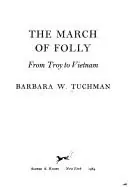
> was it always this stupid? Excellent question. There are two easily readable sources I know of covering historical events of the sort you're asking about. The first is Barbara W. Tuchman's The March of Folly: From Troy to Vietnam, where the entire premise is that stupid people did stupid things and then doubled down on stupidity as they went along. The second is Eichmann in Jerusalem: A Report on the Banality…
…Wikipedia articles https://en.wikipedia.org/wiki/Atrocities_in_the_Congo_Free_S... and https://en.wikipedia.org/wiki/Heart_of_Darkness And, btw, the last chapter of Barbara Tuchman's excellent book "The March of Folly: From Troy to Vietnam" contains an interesting reminiscense of how and why the US intervened in Vietnam.
If you haven't read it already, Tuchman's The March of Folly continues the same theme, but as the consequences of the limits of humans and our institutions played out in a few other historical settings. Not as good as Guns of August, but still worth reading
…collective effects of their efforts end up being net negative. Rather than conspiracies, I think this paradox can explain some of the challenges we face today. Barbara Tuchman wrote a great book called "The March of Folly" that basically documents some famous cases of people unwittingly working against their own best interest, even if the individual steps themselves might have made sense.
In the movie Thirteen Days, JFK mentions a book titled March of Folly by Barbara Tuchmann. I bought the book on that tip and it has an interesting chapter on Vietnam. I don't think adding a chapter on this "special operation" would even be worth it as it would just be…
…and does not include things like health care, replacing degraded equipment, etc.) and the Vietnam war cost $738B. It may be the first time a weapon system would qualify as a folly by itself (per The March of Folly, by Barbara Tuchman): * Perceived as counter-productive in its own time (not just hindsight) * Has clear alternatives * Decision made by a group, not a single individual It's generally worth noting…
> 以前也一直这么愚蠢吗?问得好。我知道有两本通俗易懂的资料涵盖了你所问的这种历史事件。第一本是芭芭拉·W·塔奇曼的《愚政进行曲:从特洛伊到越南》,其核心前提就是蠢人做了蠢事,然后在一路往前走的过程中继续蠢上加蠢。第二本是《艾希曼在耶路撒冷:一份关于平庸的恶……
> was it always this stupid? Excellent question. There are two easily readable sources I know of covering historical events of the sort you're asking about. The first is Barbara W. Tuchman's The March of Folly: From Troy to Vietnam, where the entire premise is that stupid people did stupid things and then doubled down on stupidity as they went along. The second is Eichmann in Jerusalem: A Report on the Banality…
……维基百科词条 https://en.wikipedia.org/wiki/Atrocities_in_the_Congo_Free_S... 和 https://en.wikipedia.org/wiki/Heart_of_Darkness 另外顺便提一句,芭芭拉·塔奇曼(Barbara Tuchman)的佳作《愚政进行曲:从特洛伊到越南》最后一章,对美国介入越南的来龙去脉进行了非常引人入胜的复盘回顾。
…Wikipedia articles https://en.wikipedia.org/wiki/Atrocities_in_the_Congo_Free_S... and https://en.wikipedia.org/wiki/Heart_of_Darkness And, btw, the last chapter of Barbara Tuchman's excellent book "The March of Folly: From Troy to Vietnam" contains an interesting reminiscense of how and why the US intervened in Vietnam.
如果你还没读过的话,塔奇曼的《愚政进行曲》延续了同样的主题,只是把人类及其制度局限性所导致的后果放在了另外几个历史场景中去演绎。虽然不如《八月炮火》那么精彩,但仍然值得一读
If you haven't read it already, Tuchman's The March of Folly continues the same theme, but as the consequences of the limits of humans and our institutions played out in a few other historical settings. Not as good as Guns of August, but still worth reading
……他们努力的集体效应最终变成了纯粹的负面影响。我认为比起阴谋论,这种悖论更能解释我们今天面临的一些挑战。芭芭拉·塔奇曼写过一本很棒的书叫《愚政进行曲》,基本就是记录了一些著名的案例:人们在不知不觉中损害了自身的最佳利益,哪怕每一个具体的单一步骤本身可能都挺合情合理。
…collective effects of their efforts end up being net negative. Rather than conspiracies, I think this paradox can explain some of the challenges we face today. Barbara Tuchman wrote a great book called "The March of Folly" that basically documents some famous cases of people unwittingly working against their own best interest, even if the individual steps themselves might have made sense.
在电影《惊爆十三天》里,肯尼迪提到了芭芭拉·塔奇曼写的一本叫《愚政进行曲》的书。顺着这个推荐我买了这本书,里面关于越南的那一章非常有意思。我觉得给这场“特别行动”再加一章都没啥必要,因为无非又是……
In the movie Thirteen Days, JFK mentions a book titled March of Folly by Barbara Tuchmann. I bought the book on that tip and it has an interesting chapter on Vietnam. I don't think adding a chapter on this "special operation" would even be worth it as it would just be…
……而且还不包括医疗保健、替换损耗设备等费用),而越南战争花费了 7380 亿美元。这可能是武器系统本身第一次被归类为一种“愚政”(按照芭芭拉·塔奇曼在《愚政进行曲》中的定义):* 在当时就被认为是适得其反的(而不仅是后见之明)* 存在明确的替代方案* 决策由群体而非单一掌权者做出。通常值得注意的是……
…and does not include things like health care, replacing degraded equipment, etc.) and the Vietnam war cost $738B. It may be the first time a weapon system would qualify as a folly by itself (per The March of Folly, by Barbara Tuchman): * Perceived as counter-productive in its own time (not just hindsight) * Has clear alternatives * Decision made by a group, not a single individual It's generally worth noting…